Indefinite Immigration Detention in the UK
The UK, like many other countries, has a long history of casting social outcasts, foreigners and misfits as threats to society. These groups, incarcerated and indefinitely detained, have included the mentally ill, ‘enemy aliens’, prisoners of war and suspected members of prescribed terror groups. At the moment, today, we are detaining around 2,000 people in privatised, profit-making institutions without a date for release. This is immigration detention and it is the outrage of our time.
The OED defines ‘indefinite’ as :“Without distinct limitation of being or character; indeterminate, vague, undefined” and ‘Detention’ as: “Keeping in custody or confinement; arrest.” Taken together, indefinite detention describes the condition of being held in a prison or other secure place without a set date for release. This lack of release date denies any imagination of time or future. Indefinite detention means the detained can only count up to a vague point in time rather than down to a known date of release.
The process of immigration detention in the UK is an administrative one. It is not the result of a person committing a crime but of being a crime. These are people stripped of meaningful social characteristics – as child, parent, neighbour, worker, refugee. They are de-humanised as ‘illegal’, unwanted and subject to control, destitution and deportation.
People are confined in detention centres for many reasons. They may have overstayed visas or been refused international protection but detained people are labelled under the homogenous title of ‘illegal’ and denied independent personhood. Media reports present the inmates of detention centres as dangerous and incorrigible but, while some may have committed crimes in the past, their detention is not the result of any offence. To be complete, it could be argued that people detained for so-called illegal entry, for example through the ‘one-in, one-out’ policy, have committed an immigration offence but their cases have not been heard by any judicial body before they are detained. They are detained because they have been judged as aberrant, as defective, and as outsiders who do not belong. Their confinement and detention is possible because we have been encouraged to think they are dangerous, unwanted and unworthy of our concern.
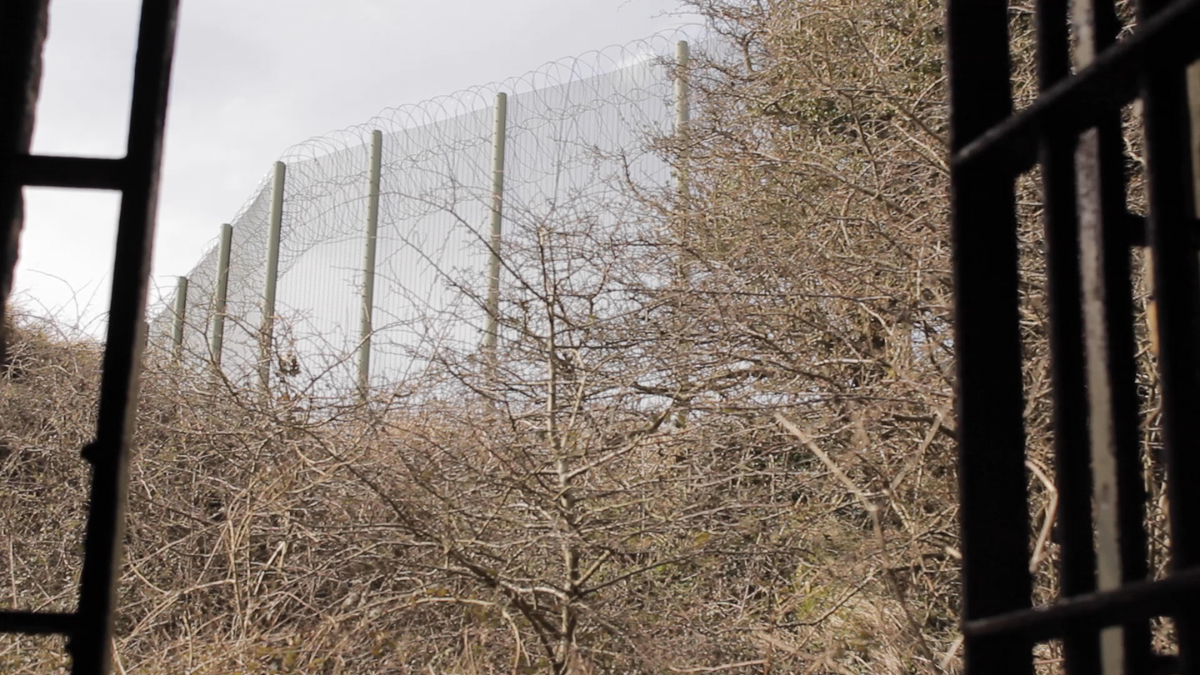
Indefinite immigration detention happens behind high walls. It may be out of sight but it is also embedded in government policy and in political narratives. The trick of immigration detention is to be both a spectacular answer to the ‘problem’ of immigration while at the same time being shrouded in secrecy and kept out of sight.
Both women and men are detained; children too but either within family groups or due to mistakes in assessing their age. Far fewer women are detained than men but the effect of indefinite detention on women can be devastating. Women may be more vulnerable to abuse in detention and can be severely affected by separation from family and community. Like men, women find detention humiliating, insulting, isolating, re-traumatising, confusing, terrifying, lonely and extremely stressful. Women are generally held for relatively short periods of time, for days or weeks, rather than the months and years men experience. I have met women, picked up[1] from their accommodation in Glasgow perhaps, driven to a distant detention site, held for a few days then released to a new address far from home with their belongings left behind. Reports have revealed the abuse women suffer in detention and their specific vulnerabilities are well understood. A co-produced briefing paper created by women who have survived detention and written up by me (available here) illustrates some of these.
There are currently seven Immigration Removal Centres (IRC) across the UK plus three Short Term Holding Facilities (STHF) . Foreign nationals who have completed sentences for criminal convictions may also be held in prisons under immigration rules. Detention ostensibly exists to facilitate removal, but it captures people whose cases are far from settled and who are often arguing fiercely for their rights to remain with their family and communities. Of the 57% of people released from detention back into the community, few leave with resolution to their cases[2]. Most will be released under strict bail conditions, supported at barely subsistence rate, with little freedom of movement or chance to build a positive future. Detention will have turned their lives over, separated them from friends, family and even possessions but will not lead to certain futures in the UK or elsewhere.
Immigration detention in the UK is officially intended to process and manage ‘cases’. According to the detention rules, indefinite detention has three objectives - to establish identity, prevent absconding and remove people from the UK. But, to the people detained, their communities and advocates, it feels a lot like punishment. There is no evidence that detention contributes to any of the three goals set out in the detention rules and research has argued that monitoring people with pending immigration in the community would be more effective than detention.
As well as a the huge human cost of immigration detention, the direct and indirect costs to the tax payer are high. The Home Office has estimated that holding one person for a day in immigration detention costs £137.45. Considering the failure of detention to remove large numbers of people or settle cases, its hard to see detention achieves any purpose beyond lining the pockets of international corporations, scapegoating the vulnerable and bolstering punitive political messaging.
Immigration Removal Centres are cruel places. People who have experienced detention are consistent and vocal about their experiences in detention. They are clear that indefinite detention is an assault on their personhood and sense of self as well as on their physical and mental health. In addition to first-hand accounts, report after report and Inquiry after Review have itemised the failings of detention management and Home Office policy to ensure detainees are treated with dignity and respect. There is ample evidence of racist, sexual and gendered abuse, physical assault, neglect, victimisation, humiliation, excessive use of restraint and punishment including solitary confinement. Inspection bodies, such as His Majesty’s Inspector of Prisons (HMIP) and the Independent Monitoring Boards, as well as NGOs who work in these prisons (for prisons are what they are) report regularly on problems within the centres. They record a lack of adequate health care and interpreting services, over-crowding, noise, insufficient contact with friends and representatives and lack of purposeful activity.
When large numbers of people are held together in confined spaces, where one group is under the total control of another, abuse of power is likely, even inevitable. Add to this mix that detainees belong to feared, criminalised and stigmatised groups – as people of colour, migrants, ‘illegals’, overstayers. Add again, the organisational purpose of detention centres – to process, remove and generate profit for the private companies who run them. IRC are staffed by poorly trained, poorly paid, non-unionised staff. They are not professional prison officers and are themselves de-valued and de-motivated. They may have little understanding of the lives of the inmates they control nor understand how they came to be detained. It is hard to imagine a more toxic and brutalising set up for an institution tasked with controlling vulnerable people.
In sum, indefinite immigration detention delivers an existential shock to the people held within it. It is an assault on dignity, on physical and mental health as well as a (re)traumatising experience for many refugees. Yet, despite all we know about detention – its cruelty, its human, social and financial cost - the system is set to be expanded rather than phased out. This kind of routinised cruelty could only be meted out to the most despised in society. Bombarded by rolling news and social media, the outcry against indefinite detention goes unheard as we have been softened up, taught to shrug and ignore the plight of these outsiders. The indefinite detention of women and men in 21st century UK is only possible because of the lack of interest paid to the treatment of migrants on the one hand and the normalisation of stigma against them, on the other. We hear little about detention and we care less – but at the same time, the spectre of detention and its evil cousins destitution and deportation, haunt immigration policy as the final demonstration of State power against our unwanted.
References:
Axel Klein and Lucy Williams (2012) Immigration Detention in the Community: Research on the Experiences of Migrants Released from Detention Centres in the UK
Sarah Turnbull (2019) Living the spectre of forced return: negotiating deportability in British immigration detention
[1] ‘Picking up’ is the wrong word here. People are not just ‘picked up’ from their homes. They are woken at dawn and taken forcibly from their accommodation. They are arrested at their workplaces or detained while they attend interviews with the Home Office. After these often violent and shocking events, people will be taken in secure vans to places of detention. These journeys can be long, frequently overnight and, as they criss-cross the UK, these vehicles collect other detainees bound for places of incarceration. The system of transporting refugees around the detention estate is rarely discussed and will be the subject of a future post.
[2] Based on the Home Office’s most recent statistics, only 107 of the 16,638 people released from detention from the 1st of January to the 31st of October, left with their cases resolved through Leave to Enter or Leave to Remain.